೧Overview
Dated Śaka 1022 (1101 CE), in the time of the Hoysala king Vishnuvardhana, this inscription opens with a long eulogy of the king’s titles, and then tells us much about the beliefs and the religious and social life of the community at the time.
It records major temple constructions by local leaders, the installation of deities and gifts of land. Above all, it names the people who founded Manakathuru, then called “Managatur”.
೨The king’s titles
The first part of the record (lines 3-18) praises the Hoysala king Vishnuvardhana with a long list of titles. Some of them:
- Yadukula-kuvalaya-sudhakara
- The moon to the lotus of the Yadu race
- Satya-ratnakara
- An ocean of truth
- Dvaravatipura-varadhishvara
- Supreme lord of Dvaravati (Belur / Halebidu)
- Shaurya-mrigaraja
- A lion in valour
- Talakadugonda-ganda
- The hero who conquered Talakad
- Vasantikadevi-labdha-varaprasada
- Blessed with the grace of the goddess Vasantika
He is said to rule Gangavadi 96,000, Nolambavadi 32,000 and Hanungal 500, “punishing the wicked and protecting the good”.
೩People in the record
After the royal eulogy, the inscription turns to the people of our village.
Chama-gavunda
A mahaprabhu (chief). Founded Managatur, built the Adalagatta and installed the god Chaveshvara.
Lines 20-21
Sanka-gavunda & Chatta-gavunda
Also said to have built Managatur. Chatta-gavunda built the Chaveshvara temple, placed its kalasa and renewed the earlier grants.
Lines 21-24
Isanya-panditadeva
Son of Karttara-jiya. Built the Moolasthana temple and set up its kalasa.
Line 1
Karttara-jiya
Praised for homa, discipline, japa, meditation and virtue; the receiver of the grants.
Lines 1, 34
Masanoja
A carpenter, son of Chikkoja. Installed the god Chikkeshvara and made gifts.
Lines 25-26
Kalimayya & Maroja
Kalimayya, the senabova (village accountant), composed the record; Maroja carved it in stone.
Line 43
೪The date
The inscription is dated Śaka 1022, in the year named Vikrama, on the fifth day of the bright half of Phalguna, a Monday. This corresponds to 5 February 1101 CE, which by calculation was a Tuesday.
The record also mentions the year Yuva, which likely corresponds to 1095 CE.
- Śaka 1022
- Shalivahana Śaka era. Add about 78 to get the CE year
- Vikrama
- The name of that year in the 60-year samvatsara cycle
- Phalguna śuddha pañcamī
- Fifth day of the bright fortnight of Phalguna
- Somavara
- Monday, as stated in the record
A note for history readers. Historians generally date Vishnuvardhana’s reign from about 1108 CE and his capture of Talakad to about 1116. The title Talakadugonda in a record dated 1101 is therefore noteworthy; in such cases scholars discuss whether the record was engraved later or the date read differently. This page gives the date exactly as the inscription states it.
From then to now
A clock hand goes from 1 to 12 and starts again. In the same way, our almanac gives every year one of sixty names: Prabhava, Vibhava, Shukla and so on. After sixty years the names start again from the first.
This wheel has sixty marks. Each mark is one year.
- Year the stone was written: Vikrama (1100-01)
- This year: Parabhava (2026-27)
From the year the stone was written to this year is 926 years. The sixty names have come round fifteen full times, and this year, Parabhava, is in the sixteenth round.
೫The grants
Wet and dry land was given for the deities’ worship (anga-bhoga), bathing (abhisheka), food offerings and perpetual lamps. The plots are located by village landmarks: below the big tank, below the Adalagatta, in front of the temple, by the stream, to the south (tenkana) and west (haduvana) of the village.
- For Chaveshvara
- Wet land below the big tank and below the Adalagatta; an ox-driven oil press to keep the perpetual lamp burning.
- For Moolasthana
- Wet land in front of the temple, black-soil wet land and dry land.
- For Chikkeshvara
- Wet land below the big tank and dry land.
- For the Brahmins of Brahmapuri
- Wet land and dry land.
- For Sankimoja
- Ten kolaga of wet land and a hundred kamba of dry land.
- For the gaudas
- Kodangi wet land below the big tank, gavudagatta and dry land.
The gifts were made by washing the feet of Karttara-jiya and pouring water (dhārāpūrvaka). The record closes with the customary blessing and curse: whoever protects this gift earns the merit of giving a thousand kapila cows at the Ganga, Kurukshetra and Varanasi; whoever destroys it incurs the sin of killing those cows and Brahmins. The Sanskrit verse “svadattām paradattām vā…” warns that one who takes away land given by himself or by others is born a worm for sixty thousand years.
Some words explained
- salage · ಸಲಗೆ
- ¼ mana. A grain measure; wet land is measured by the seed it takes. (from the source document)
- mattar · ಮತ್ತರು
- A unit for measuring land. (from the source document)
- Dvaravatipura · ದ್ವಾರವತೀಪುರ
- Belur or Halebidu, the Hoysala capital. (from the source document)
- gadde / beddalu · ಗದ್ದೆ / ಬೆದ್ದಲು
- gadde = wet (irrigated) land; beddalu = dry, rain-fed land.
- nandadivige · ನಂದಾದೀವಿಗೆ
- A perpetual lamp kept burning before the deity.
- gavunda / gauda · ಗಾವುಂಡ / ಗೌಡ
- Village headman.
- senabova · ಸೇನಬೋವ
- Village accountant and record-keeper (later shanubhoga).
- kalasa · ಕಳಸ
- The sacred pot-shaped finial set on top of a temple.
- dharapurvaka · ಧಾರಾಪೂರ್ವಕ
- Giving with a pouring of water; “kalam kacchi” = after washing the receiver’s feet.
೬Full text
The original Old Kannada text, rendered in modern Kannada script. The first line is carved in an arch across the top of the stone. Letters in [ ] are supplied by the editor.
- ೧ಶ್ರೀ ಮೂಲಸ್ತಾನದೇವರ ಪಾದಾರಾದಕ ಮೂಲಸ್ತಾನದೇವರ ದೇವಾಲ್ಯವಂ ಕಳಸನಿರ್ಮ್ಮಾಣ ಮಾಡಿದ ಕರ್ತ್ತಾರಜೀಯರ ಸು[ಪು]ತ್ರ ಈಸಾನ್ಯಪಣ್ಡಿತದೇವರು (arched line)
- ೨ನಮಸ್ತುಂಗ ಶಿರಸ್ತುಂಬಿ ಚಂದ್ರ ಚಾಮರ ಚಾರವೇ ತ್ರೈಳೋಕ್ಯ ನಗರಾರಂಬಮೂಲಸ್ತಂಭಾಯ ಶಂಭವೇ ||
- ೩ಸ್ವಸ್ತಿ ಸಮಧಿಗತ ಪಂಚಮಹಾಶಬ್ದ ಮಹಾಮಂಡಳೇಶ್ವರಂ | ದ್ವಾರವ
- ೪-ತೀಪುರ ವರಾಧೀಶ್ವರಂ | ಯದುಕುಳ ಕುವಳಯಸುದಾಕರಂ ಸತ್ಯ ರತ್ನಾಕರಂ |
- ೫ಯಾದವನಾರಾಯಣಂ | ಚತುರ ಯುವತೀ ಚಾರಾಯಣಂ | ಚಕ್ರಕೂಟ ಕೋಟಾಟ
- ೬ವೀದಾವಾನಳಂ | ರಿಪುಬಳಜಳಧಿಬಡವಾನಳಂ | ಶೌರ್ಯ್ಯಮೃಗರಾಜಂ |
- ೭ಮಲೆರಾಜರಾಜಂ | ಕಳಪಾಳ ಕಪಾಳ ಶೈಳೋಪ[ಲ]ವಜ್ರದಣ್ಡ ಮಲೆಪರೊ
- ೮-ಳ್ಗಣ್ಡ | ನೃಪಕುಳಕರಿಕಳಭಯೂಥನಾಥಂ | ಗಣ್ಡಗಿರಿನಾಥಂ | ಉದ್ದಂಡಪ್ರಚಂಡಪಾ
- ೯-ಣ್ಡ್ಯ ಗರ್ವ್ವಪರ್ವ್ವತಪಾಕಶಾಸನಂ | ವಿವೇಕ ಕಮಳಾಸನಂ | ಜಗದ್ದೇವಪ್ರಬಳಪನ್ನಗವೈನತೇ
- ೧೦-ಯಂ | ಭುಜಬಳರೌಹಿಣೇಯಂ | ನರಸಿಂಹಬ್ರಹ್ಮಭೂರಿಭೂರುಹ ಕಠೋರ ಕು
- ೧೧-ಠಾರಂ | ಚಾರುವಿಚಾರಂ | ಇರುಂಗೊಳಮದಮರಾಳಮೇಘಾರವಂ | ಪುರುಷಾರ್ತ್ಥಪುರೂರವಂ | ವಿಜಯಲಕ್ಷ್ಮೀಭವನ
- ೧೨ಮಂಗಳಮಣಿತೋರಣಂ | ಆದಿಯಮನಿವಾರಣ | ಮಣ್ಡಳಿಕ ಘಟಸರ್ಪ್ಪ | ರೂಪ ಕಂದರ್ಪ್ಪ | ಕೌಸ್ತು
- ೧೩ಭಾಭರಣಸ್ಮರಣಪರಿಣತಾನ್ತಃಕರಣ | ವಿಕ್ರಮಾಭರಣ | ತಳಕಾಡುಗೊಂಡಗಂಡ | ಕದನ ಪ್ರಚಂಡ
- ೧೪ಬೆಂಗಿರಿಮತಂಗಚಾರಿಸರಭ | ಆದಿರಾಜಸನ್ನಿಭ | ವಾಸನ್ತಿಕಾದೇವೀಲಬ್ಧವರಪ್ರಸಾದಂ | ಮೃಗಮದಾಮೋದಂ | ನಾ
- ೧೫-ಮಾದಿ ಸಮಸ್ತಪ್ರ[ಶ]ಸ್ತಿ ಸಹಿತಂ | ಶ್ರೀಮನ್ಮಹಾಮಂಡಳೇಶ್ವರ | ತಳಕಾಡುಕೊಂಗುನಂಗಲಿ
- ೧೬ಗಂಗವಾಡಿ ನೊಳಂಬವಾಡಿ ಬನವಾಸೆ ಹಾನುಂಗಲ್ಲುಗೊಂಡ ಭುಜಬಳವೀರಗಂಗ ಕಡಂಬ ವಿಷ್ಣುವರ್ಧನದೇವರು ಗಂಗವಾ
- ೧೭-ಡಿ ತೊಂಬತ್ತಾರುಸಾಯಿರಮಂ ನೊಣಂಬವಾಡಿ ಮೂವತ್ತಿರ್ಛಾಸಿರಮಂ ಹಾನುಂಗಲ್ಲ ಯ್ನೂರಮಂ ದುಷ್ಟನಿಗ್ರಹಶಿಷ್ಟಪ್ರ
- ೧೮-ತಿಪಾಳನದಿ ನಾಳುತ್ತುಂ ಸುಖ ಸಂಕಥಾವಿನೋದದಿಂ | ವಿಜಯರಾಜ್ಯಂಗೆಯ್ಯುತ್ತಮಿರೆ | ಸ್ವಸ್ತಿ ಸಮಸ್ತ
- ೧೯ಕಾಲಾತೀತ ಶಕವರಿಶ ೧೦೨೨ ವಿಕ್ರಮಸಂವತ್ಸರ | ಇಪ್ಪತ್ತೆರಡೆನೆಯಾ ಯುವಸಂವತ್ಸರ ಸ್ವಸ್ತಿ
- ೨೦ಸಮಸ್ತ ಮಹಾಪ್ರಭು ಚಾಮಗಾಉಣ್ಡಂ ಮನಗತೂರಂ ಮಾಡಿ ಅಡಳಗಟ್ಟವಂ ಕಟ್ಟಿಸಿ ಚಾ
- ೨೧-ವೇಸ್ವರದೇವರ ಪ್ರತಿಷ್ಟೆಯಂ ಮಾಡಿ ಧರ್ಮ್ಮಶ್ಚಿತ್ತನಾಗಿ ಹೋದಿಂ ಬಳಿಕ || ಸ್ವಸ್ತಿ ಶ್ರೀಮನ್ಮಹಾ
- ೨೨-ಪ್ರಭು ಸಂಕಗಾವುಣ್ಡನುಂ ಚಟ್ಟಗಾವುಣ್ಡನುಂ ಮನಗತ್ತೂರಂ ಮಾಡಿ ಧರ್ಮಶ್ಚಿತ್ತರಾ
- ೨೩-ಗಿ ಆ ಚಟ್ಟಗಾವುಣ್ಡ | ಚಾವೇಸ್ವರದೇವರ ದೇವಾಲ್ಯವಂ ಗೆಯ್ಸಿ ಕಳಸ ನಿರ್ಬ್ಬಾ
- ೨೪-ಣ ಮಾಡಿ ಆ ಧರ್ಮ್ಮವಂ ಪ್ರತಿಪಾಳಿಸಿ | ಪೂರ್ವ್ವಮರಿಯಾದೆಯಿಂ ಬಿಟ್ಟ ದತ್ತಿ | ಸ್ವಸ್ತಿ ಶ್ರೀಮ
- ೨೫-ನ್ಮಹಾಗುಣ ಸಂಪುಂನ್ಯ ಬಡಗಿ ಚಿಕ್ಕೋಜನ ಮಗ ಮಸಣೋಜ ಚಿಕ್ಕೇಸ್ವರ ದೇವರ ಪ್ರತಿ
- ೨೬-ಷ್ಟೆಯಂ ಮಾಡಿ ಧರ್ಮ್ಮಚಿತ್ತನಾಗಿ || ಚಾವೇಸ್ವರ ದೇವರಿಗೆ ಅಂಗ ಭೋಗಕ್ಕಂ ಸ್ನಾನ ನಿವೇದ್ಯಕಂ |
- ೨೭ನಂದಾದೀವಿಗೆಗಂ ಬಿಟ್ಟ ದತ್ತಿ | ಹಿರಿಯ ಕೆರೆಯ ಕೆಳಗೆ ಗದ್ದೆ ಸಲಗೆ ೨ | ಅದಳ
- ೨೮ಗಟ್ಟದ ಕೆಳಗೆ ಗದ್ದೆ ಸಲಗೆ ೨ | ಬೆದಲೆ ಮೂಲಸ್ತಾನದೇವರಿಗೆ ದೇವಾಲ್ಯದ ಮುಂದೆ ಗದ್ದೆ ಸಲಗೆ ೨ |
- ೨೯ಎರೆಯ ಗದ್ದೆ ಸಲಗೆ ೨ | ಬೆದ್ದಲೆ ತೊರೆಯ ಬಳಿಯ್ದ ಮತ್ತರು ೨ | ಊರ ತೆಂಕಣ
- ೩೦ಹಾಳಕೆಯಿ ಮತ್ತರು ೨ | ಹಡುವಣ ಹೊಲವೇರೆಯ ತಾಱಿಯ ಬಾಗು ಮ
- ೩೧-ತ್ತರು ೧ | ಚಿಕ್ಕೇಸ್ವರದೇವರಿಗೆ ಹಿರಿಯ ಕೆರೆಯ ಕೆಳಗೆ ಗದೆ ಸಲಗೆ ೨ |
- ೩೨ಬೆದ್ದಲೆ ಮತ್ತರು ೧ | ಬ್ರಹ್ಮಪುರಿಯ ಬ್ರಾಹ್ಮಣರಿಗೆ ಗದ್ದೆ ಸಲಗೆ ೧ | ಬೆದ್ದಲೆ ಮತ್ತರು ೭
- ೩೩ಸಂಕಿಮೋಜರಿಗೆ ಗದ್ದೆ ಕೊಳಗ ೧೦ | ಬೆದ್ದಲೆ ಕಂಬ ೧೦೦ | ಇಂತೀ ಸ್ತಾನವಂ | ಹೋಮನೇ
- ೩೪-ಮ ಜಪಸಮಾಧಿಸೀಲಗುಣಸಂಪನ್ನ ರಪ್ಪ ಕರ್ತ್ತಾರಜೀಯರ ಕಾಲಂ ಕಚ್ಚಿ ಧಾರಾ
- ೩೫ಪೂರ್ವ್ವಕ್ಕಂ ಮಾಡಿ ಕೊಟ್ಟರು | ಫಾಲ್ಗುಣ ಸುದ್ಧ ಪಂಚಮೀ ಸೋಮವಾರ ವಿತಿಯಪಾ
- ೩೬-ತ ಉತ್ತರಾಯಣ ಸಂಕ್ರಮಾಣದಲಿಂನ್ತೀ ದರ್ಮ್ಮವಂ ಸಲಿಸಿದಂ ಗಂಗೆ ಗುರುಕ್ಷೇ
- ೩೭-ತ್ರ ವಾರಣಾಸಿಯಲು ಸಹಸ್ರ ಕವಿಲೆಯಂ ಕೋಡು ಕೊಳಗುವಂ ಸುವರ್ನ್ನದಲು ಕಟ್ಟಿಸಿ ಚ
- ೩೮-ತುರ್ವ್ವೇದಪಾಲಕರಪ್ಪ ಬ್ರಾಹ್ಮಣರಿಗೆ ಹಿರಂಣ್ಯ ಸಹಿತ ದಾನಂ ಕೊಟ್ಟ ಫಳವಕ್ಕು
- ೩೯ಇಂತೀ ಧರ್ಮ್ಮವಂ ನಾವನೋರ್ವ್ವ ನಳಿದನಪ್ಪಡೆ ಆ ಕವಿಲೆಯನಾ ಬ್ರಾಹ್ಮಣರಂ ಕೊಂದ ಪಾತಕ
- ೪೦ನಕ್ಕು ಸ್ವದತ್ತಂ ಪರದತ್ತಂ ವಾ ಯೋ ಹರೀ ವಸುಂಧರಾ ಷಷ್ಠಿರ್ವ್ವರಿಷ ಸಹಸ್ರಾಣಿ ಪ್ರರ್ದ ಚಾಯತೇ ಕ್ರಿಮಿ ||
- ೪೧ಚಾವೇಸ್ವರ ದೇವರ ನಂದಾದೀವಿಗೆಗಂ ಬಿಟ್ಟ ಎತ್ತು ಗಾಣ ೧ | ಹಿರಿಯ ಕೆರೆಯ ಕೆಳಗೆ
- ೪೨ಗೌಡುಗಳಿಗೆ ಕೊಡಂಗಿ ಗದ್ದೆ ಸಲಗೆ ೧೨ ಗವುಡಗಟ್ಟ ೨೦ || ಸ್ವಯಂ ಬೆದ್ದಲು ಮತ್ತರು ೧೫
- ೪೩ಇಂನ್ತೀ ಸಾಸನವ ಬರೆದ ಸೇನಭೋವ ಕಾಳಿಮಯ್ಯ | ಬರೆದೆಂ ಮಾರೋಜ
- ೪೪ಮಂಗಳಂ ಮಹಾ ಶ್ರೀ ||
Parts of the inscription
- Line 1The arched headingNames Isanya-panditadeva, who built the Moolasthana temple and set up its kalasa.
- Line 2Invocation“Namas tunga-śiras-cumbi…”: a salutation to Shiva (Shambhu), the verse that opens a great many Kannada inscriptions.
- Lines 3-18The king's titles (praśasti)The titles of the Hoysala Vishnuvardhana and the provinces he ruled: Gangavadi 96,000, Nolambavadi 32,000 and Hanungal 500.
- Lines 18-19The dateŚaka year 1022, the year named Vikrama; the year Yuva is also mentioned.
- Lines 20-26Founding the village and its templesChama-gavunda founds Managatur, builds the Adalagatta and installs Chaveshvara. Then Sanka-gavunda and Chatta-gavunda; the carpenter Masanoja installs Chikkeshvara.
- Lines 26-35The grantsWet and dry land given for worship, bathing, food offerings and a perpetual lamp; dated Phalguna śuddha pañcamī, Monday.
- Lines 35-40Blessing and curseMerit for those who protect the grant, sin for those who destroy it. This is the customary close of a grant.
- Lines 41-44Further grants and the makersAn ox-driven oil press for the lamp, land for the gaudas; written by Senabova Kalimayya, engraved by Maroja.
೭The stone’s journey
The stone is known to have stood near the old outlet (kodi) of the Manakathuru tank. In the late 1960s or the 1970s the villagers brought it to the temple to keep it safe. It may once have belonged to an old temple that stood near the tank.
- c. 1095 CEThe year Yuva, also mentioned in the record.
- 1101 CEŚaka 1022, Phalguna śuddha pañcamī: the date of the inscription.
- 1902B. L. Rice publishes Epigraphia Carnatica, Vol. 5 (Hassan District), which records this inscription.
- 1960s-70sVillagers move the stone from near the old outlet (kodi) of the Manakathuru tank to the temple for safekeeping.
- TodayKept safe at the Sri Kalabhairaveshwara Temple.
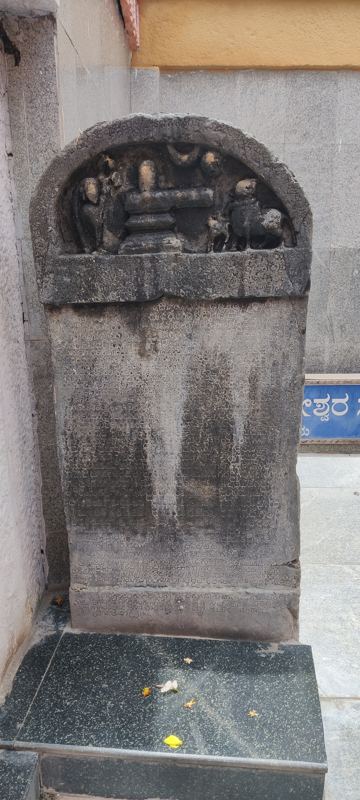
The letters on the lower part of the stone have worn with time. Please help preserve it: avoid touching the stone or applying turmeric, kumkum or oil, which slowly wear the letters away.
Sources
- B. L. Rice (ed.), Epigraphia Carnatica, Vol. 5, Hassan District. The core information about this inscription comes from this volume.
- Village document: “ಮನಕತ್ತೂರಿನ ಕಲ್ಬರಹ: ಹೊಯ್ಸಳ ಕಾಲದ ಒಂದು ನೋಟ” (The Manakathuru Inscription: A Glimpse of the Hoysala Age), 2025.
The text is reproduced as given in the village document; small typographic variations are possible. Corrections are welcome.
Back to the temple page